How to Choose a Men’s Wallet That Will Last
The wallet article is worth keeping, but we should remove its duplicate H1, repetitive retailer lists and generic luxury language.
Use:
- New title: How to Choose a Men’s Wallet That Will Last
- Keep the existing URL slug
- SEO title: Men’s Wallet Buying Guide: How to Choose Well
- Meta description: Learn how to choose a men’s wallet that suits your pocket, habits and style, from leather quality and construction to size, capacity and care.
- Category: Buying Guides
- Tags: Wallets, Leather Goods, Men’s Accessories
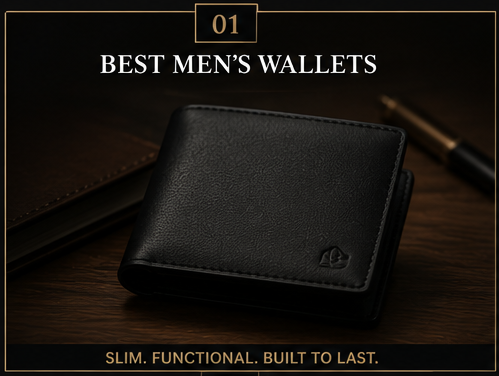
The existing featured image is assigned, so retain it for now. Current wallet ranges still support the article’s distinction between card sleeves, note-carrying wallets and coin wallets. Bellroy’s current wallet range
Replace the article body with the following. Do not add another H1 inside the post—the WordPress title already supplies it.
A wallet is used more often than almost any other accessory a man owns. The wrong one gradually becomes a bulky collection of expired cards and forgotten receipts. The right one carries what you need, sits comfortably in your pocket and improves rather than deteriorates with age.
Choosing well is less about finding an impressive logo and more about understanding your habits. Before comparing brands or prices, decide what your wallet genuinely needs to do.
Begin With What You Carry
Empty your current wallet and place everything on a table.
Remove expired cards, old receipts and anything you rarely use. You may discover that you need far less capacity than you imagined.
Most men fall into one of three groups:
- Those who carry only a few payment and identification cards
- Those who carry cards and folded banknotes
- Those who still need room for cash, coins and receipts
Choose for your real routine rather than preparing for every possible eventuality. An oversized wallet usually encourages you to carry more than you need.
Which Wallet Style Is Right for You?
Slim Cardholder
A cardholder is the cleanest option for men who rarely carry cash. It usually holds four to eight cards and slips easily into a front trouser or inside jacket pocket.
The disadvantage is limited flexibility. Very tight card slots can also become frustrating if you prefer cards to be easily accessible.
Martin’s urban wardrobe suits a slim cardholder: modern, discreet and free from unnecessary bulk.
Compact Bifold
The bifold remains the most versatile choice. It provides card slots and space for notes while retaining a familiar, straightforward design.
Look for a model that closes comfortably when filled. If it already feels thick while empty, it will become cumbersome in everyday use.
A well-proportioned bifold works with almost any style, from David’s practical country clothing to Alan’s more classic wardrobe.
Wallet With a Coin Pocket
Coins have become less important for many people, but they have not disappeared. If you regularly use parking meters, lockers or cash-only businesses, a secure coin section can still be useful.
Choose one with a properly designed fastening. A poorly positioned coin pocket adds bulk and can distort the wallet’s shape.
Travel Wallet
A travel wallet is designed for passports, tickets, currency and documents. It is useful for journeys but generally too large for everyday use.
Keep it as a separate piece rather than forcing one oversized wallet to perform two different jobs.
Understanding Leather Quality
Leather terminology can sound more helpful than it really is. The name of the material matters, but it does not tell you everything about how well a wallet has been made.
Full-grain leather retains the natural outer surface of the hide. It can be durable and develop an attractive patina, although marks and variations are part of its character.
Top-grain leather has been lightly corrected to create a more uniform finish. A well-made top-grain wallet can still provide excellent durability and may suit men who prefer a smoother appearance.
“Genuine leather” is a broad description rather than a guarantee of quality. Examine the construction, finish and reputation of the manufacturer instead of relying on those words alone.
Good non-leather alternatives are also available. If you prefer one, judge it by its strength, feel, stitching and long-term durability rather than expecting it to imitate leather perfectly.
Construction Matters as Much as Material
Expensive leather cannot compensate for careless construction.
Check for:
- Tight, even stitching without loose threads
- Smooth, properly finished edges
- Card slots that hold cards securely without trapping them
- A fold that closes naturally
- Minimal excess glue
- A lining that lies flat
- A sensible returns policy or manufacturer’s warranty
Run your fingers around the edges and flex the wallet gently. It should feel substantial without feeling stiff or heavily padded.
Choose Comfort Over Capacity
A wallet should not create an obvious block in a trouser pocket. This matters particularly with straighter, better-fitting trousers where unnecessary bulk disrupts the line of the clothing.
If you prefer carrying your wallet in a jacket, check that it fits the inside pocket without pulling the fabric out of shape.
Men who find very tight card slots awkward should avoid aggressively minimalist designs. A slightly larger bifold with accessible slots may prove far more pleasant to use than the slimmest wallet available.
Do You Need RFID Protection?
Some wallets include a blocking layer intended to shield contactless cards from unauthorised scanning.
It can provide additional reassurance, particularly when travelling, but it should not take priority over comfort, construction or usable capacity. Consider it an optional feature rather than the sole reason to choose a wallet.
How Much Should You Spend?
A good wallet does not need to carry a designer price.
Pay for:
- Dependable material
- Careful stitching and edge finishing
- A practical internal layout
- A shape that suits your pocket
- Reliable customer service
A prominent logo may increase the price without improving any of those qualities. Equally, the cheapest wallet can become poor value if its edges split or card slots stretch after limited use.
The sensible choice is the best-constructed wallet within your budget—not necessarily the most expensive one.
How to Care for a Leather Wallet
Avoid overfilling it. Stretching the card slots and fold is the quickest way to spoil its shape.
Keep it away from prolonged moisture and direct heat. If it becomes wet, empty it and allow it to dry naturally.
Wipe away surface dirt with a soft cloth. A small amount of suitable leather conditioner once or twice a year may help maintain suppleness, but always follow the maker’s instructions and test it discreetly first.
A Simple Wallet Checklist
Before buying, ask:
- How many cards do I genuinely use?
- Do I regularly carry banknotes or coins?
- Will it fit comfortably in my preferred pocket?
- Can I remove the cards without struggling?
- Are the stitching and edges cleanly finished?
- Am I paying for construction or merely a logo?
- Will I still be comfortable carrying it in five years?
The Mister Alley Verdict
For most men, a compact bifold or well-designed cardholder will provide the best balance of capacity, comfort and appearance.
Choose a wallet that fits your habits rather than one designed to impress from a display cabinet. The best wallet is not the one people notice immediately. It is the one that works reliably every day and looks better after years of use.